
Home › Coverages › Commercial Auto Insurance for Landscapers
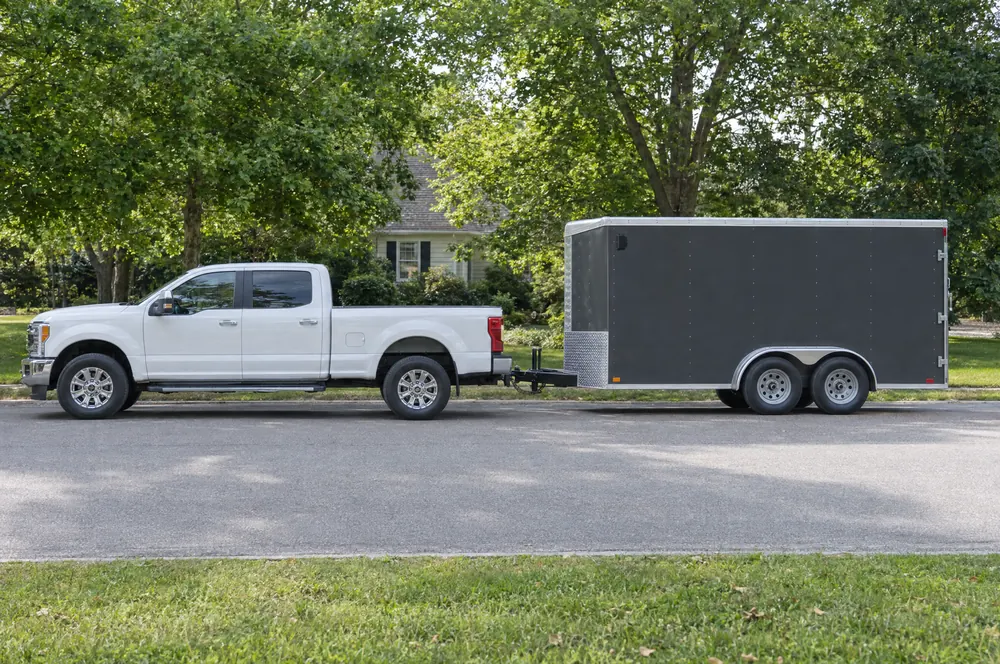
Commercial auto insurance for landscape trucks and trailers
Commercial auto insurance for landscapers covers the crew trucks, dump trucks and trailers your business runs, including liability when one of them hurts someone or damages property on the road. Hired and non-owned auto can be added for the times a worker drives a personal pickup to a property on company business.
- Since 2003
- 12+ A-rated carriers
- 28 states
- Independent agents
Start your landscaping insurance quote
Takes about a minute. A licensed agent follows up.
Licensed in 28 states · NPN 7642818 · Since 2003
How commercial auto insurance for landscapers works
Commercial auto insurance for landscapers is the policy for any truck your business owns, leases or puts to work hauling crews and gear. When a driver on company business hurts another motorist or wrecks a parked car, it answers for the claim. Physical damage coverage can also repair your own truck after a crash, a theft or a hailstorm.
A personal auto policy is typically priced for commuting and errands. Once a pickup carries your logo, tows a mower trailer to fifteen stops a day and gets driven by a crew lead, it belongs on a business policy. A personal carrier may question a claim once it learns how the truck was really used.
Most landscaping auto policies are built from three parts:
- Liability for injuries and property damage your drivers cause.
- Physical damage (comprehensive and collision) to repair or replace your own trucks and any trailers listed with a value.
- Hired and non-owned auto (HNOA), which covers your company's liability when someone drives a rented vehicle or their own pickup for the business. It doesn't repair that worker's truck.
The declarations page uses numbered "symbols" to decide which vehicles count as covered autos. That small code matters more for landscapers than for most trades, because trailers are autos on the standard business auto form. Get a quote for your landscaping business → Buying the first work truck? Our guide on how to start a landscaping business walks through the truck, trailer and insurance steps in order.
| What it covers | What it usually doesn't |
|---|---|
| A crash your crew truck, box truck or dump truck causes, including other drivers' injuries | Mowers, trimmers and blowers riding in the trailer (that's equipment coverage) |
| Liability for a trailer hitched to a covered truck, subject to your policy symbols | Physical damage to an owned trailer that isn't listed with a value |
| Comprehensive and collision on listed trucks and trailers | A skid steer that backs into a client's wall at the property (that's general liability) |
| Liability for a skid steer or loader while it's being carried or towed by a covered auto | Repairs to an employee's own pickup under HNOA |
| Racks, toolboxes and other gear permanently attached to the truck | Fertilizer or herbicide that leaks from a tank you're hauling, unless the pollution exclusion is bought back |
| Your liability when a worker drives a personal vehicle for the business (HNOA) | Business use of a truck insured only on a personal policy |
Three road claims landscaping crews actually face
The dump trailer nobody added to the policy
Example scenario: A maintenance company buys a second dump trailer in May to keep up with mulch season. The owner means to call the agent but never does. In July, the trailer's tailgate swings open on a county road and a load of rock cracks the windshield of the car behind it. Whether the liability claim is covered depends on the symbol. If the policy covers "any auto" or all owned autos, the new trailer is usually included. If it covers only the vehicles listed on the schedule, an unlisted owned trailer may not be covered, and the damage to the trailer itself almost certainly isn't.
The skid steer that shifted on the ramp
Example scenario: An install crew is hauling a compact track loader to a paver job. A chain works loose, the machine shifts on the highway on-ramp, and the trailer swerves into the next lane and clips an SUV. On the standard forms, a piece of mobile equipment being towed by a covered auto is treated as a covered auto for liability, so this is usually an auto claim. Two hours later, if the same loader backs into the client's garage door, that's a general liability question instead.
The crew lead in his own pickup
Example scenario: A crew lead uses his personal truck to run a replacement irrigation valve out to a commercial site and rear-ends a delivery van at a light. The van's owner sues the landscaping company as well as the driver. HNOA is the coverage that can answer for the company's share of that liability. It won't fix the crew lead's bumper; his own auto policy handles that.
Limits and what drives the price
Auto liability is usually written as a combined single limit, a single number that covers injuries and property damage together for each accident. $1 million is a common choice for a landscaping company. Contracts can ask for more. One example: the City of Pleasanton, California's September 2026 agreement for landscape services asks for $2 million each accident in auto liability, covering owned, hired and non-owned vehicles. Higher requirements are usually met by stacking an umbrella policy on top of the auto.
Pricing is figured truck by truck. Underwriters look at each vehicle's weight class and value, how far it travels, where it's parked at night, who drives it and what those drivers' records show.
| Source | Figure | What it measures |
|---|---|---|
| One large online insurance marketplace | About $299 a month ($3,590 a year) | Median for its landscaping customers, updated 2026-10-12 |
| MoneyGeek | About $193 a month ($2,318 a year) | Average for a modeled lawn care and landscaping business, updated 2026-09-11 |
| Progressive Commercial | About $260 a month per vehicle | Average 2025 new-policy premium per power unit for contractor autos |
Your price depends on your payroll and class codes, your revenue, the services you offer (especially chemical work), your trucks and trailers, your claims history and the limits you choose. Our landscaping insurance cost guide puts the auto figures next to the other coverages.
Who needs it most
Every landscaper with a work truck needs some form of it, but a few situations raise the stakes.
- Growing mowing routes. The jump from one truck to two usually means a second driver, a second trailer and the first time the owner isn't behind the wheel. Lawn care business insurance covers the rest of that stack.
- Install and hardscape crews. Dump trucks, flatbeds and loaders on trailers carry heavy weight. Vehicles with a weight rating or actual weight of 10,001 pounds or more used across state lines generally need a USDOT number, and some states apply that rule inside their borders too. Check the rules with your state's transportation agency. Landscape contractor insurance explains the other risks that come with that work.
- Turf treatment rigs. The standard auto form excludes pollution from materials you're hauling, apart from the fuel and fluids the truck runs on. Some carriers offer a buy-back endorsement for auto pollution. Ask about it if you run spray tanks; the pesticide applicator coverage page covers the job-site side.
- H-2B crews. If you drive H-2B workers in company vans or trucks, Department of Labor rules require that transportation to meet federal motor carrier standards for vehicle safety, driver licensing and vehicle insurance at a minimum. Review your auto limits before the workers arrive. Get a quote for your landscaping business →
Requirements by state
Most states set a minimum auto liability limit, and client contracts usually ask for far more than that floor. A few of our states also add vehicle rules that touch landscapers directly.
- Alabama requires every vehicle and piece of mobile equipment used in permitted landscape and horticulture work to show the permit holder's name in letters at least 3 inches tall, so your trucks are easy to identify at any roadside incident.
- Pennsylvania requires businesses that move regulated articles, including vehicles, equipment and landscaping waste, within or out of the spotted lanternfly quarantine to hold a state permit, and every business vehicle traveling in the zone needs a copy of it.
- South Carolina coastal crews often haul their own debris. Myrtle Beach, for example, makes landscape contractors haul away the yard debris they generate, which keeps dump trailers on the road all season.
The full list of the 28 states where we're licensed has each state's licensing rules.
Related coverage
Frequently asked questions
Do I need commercial auto insurance for my lawn care truck?
Is my landscape trailer covered by my truck's insurance?
Do I need hired and non-owned auto if my crew uses their own trucks?
Does commercial auto cover the mowers in my trailer?
Is a skid steer covered under my auto policy?
Ready to see what you'd pay?
Independent agents, 12+ A-rated carriers, and a licensed agent back to you within one business day.