
Independent agency · since 2003
Landscaping business insurance that grows with your crews
Landscaping company insurance from independent agents who work with green-industry businesses every week. We compare 12+ A-rated carriers for liability, workers' comp, trucks and trailers, equipment and chemical application, in the 28 states where we're licensed.
Takes about a minute. A licensed agent reviews your answers and follows up.
- 20+ yearsInsuring businesses since 2003
- 12+ carriersRated A- or better by AM Best
- 28 statesLicense number on every state page
- IndependentWe work for you, not one insurer
We shop your landscaping business with carriers like










Carrier names and logos are trademarks of their respective owners. Not all carriers write in every state.
Who we insure
A mowing route, an install crew and a turf-treatment company all cut grass or move dirt, but an underwriter sees three different businesses. We place each one with carriers that want that kind of work.
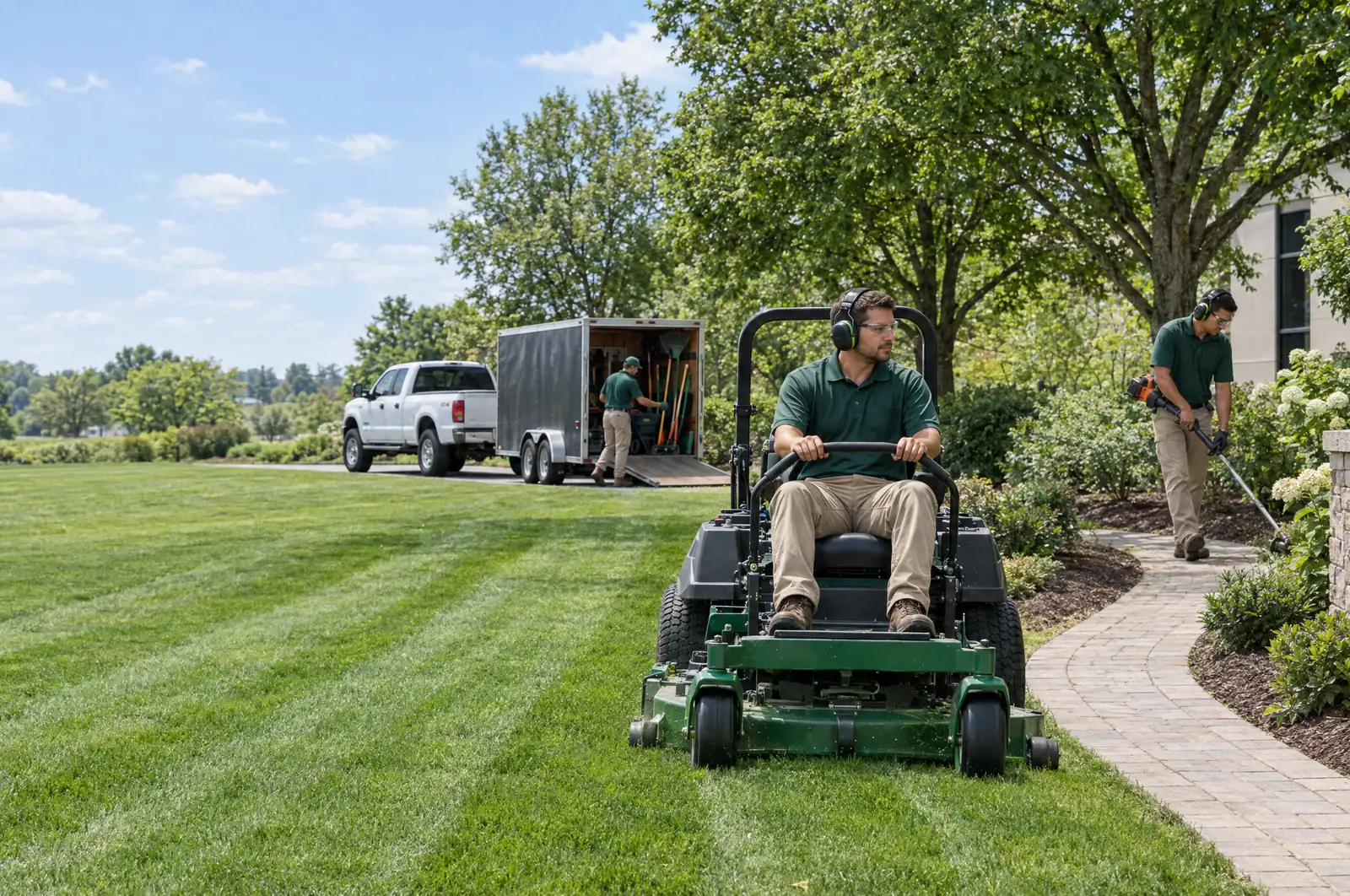
 Lawn care and mowingSolo routes, multi-crew maintenance and the first employee you hire to run a second trailer.
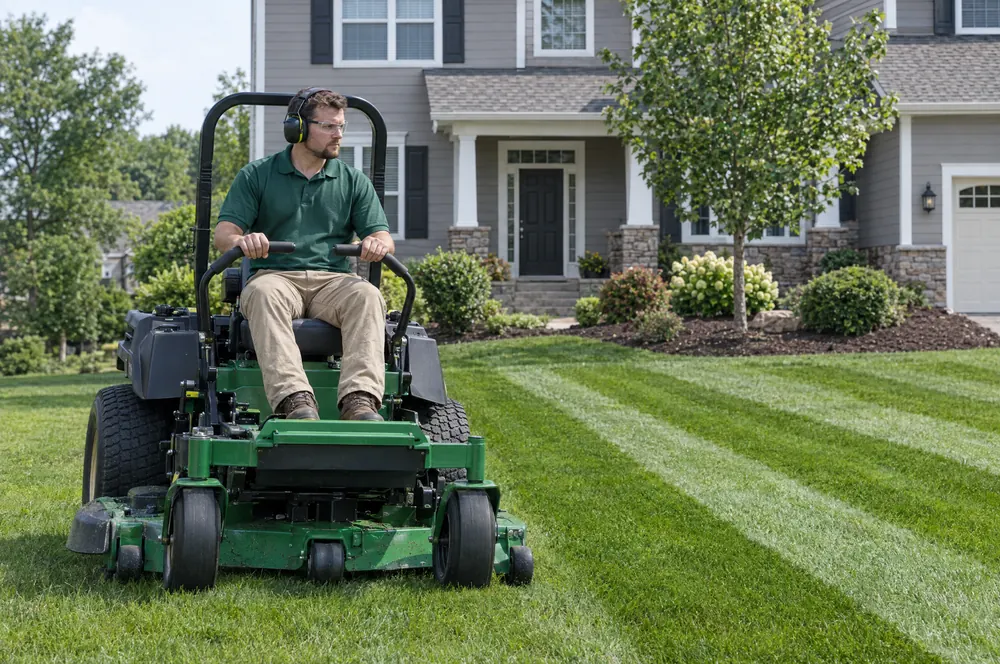
  Commercial groundsHOA common areas, office parks, campuses and the property managers who send you their contract.
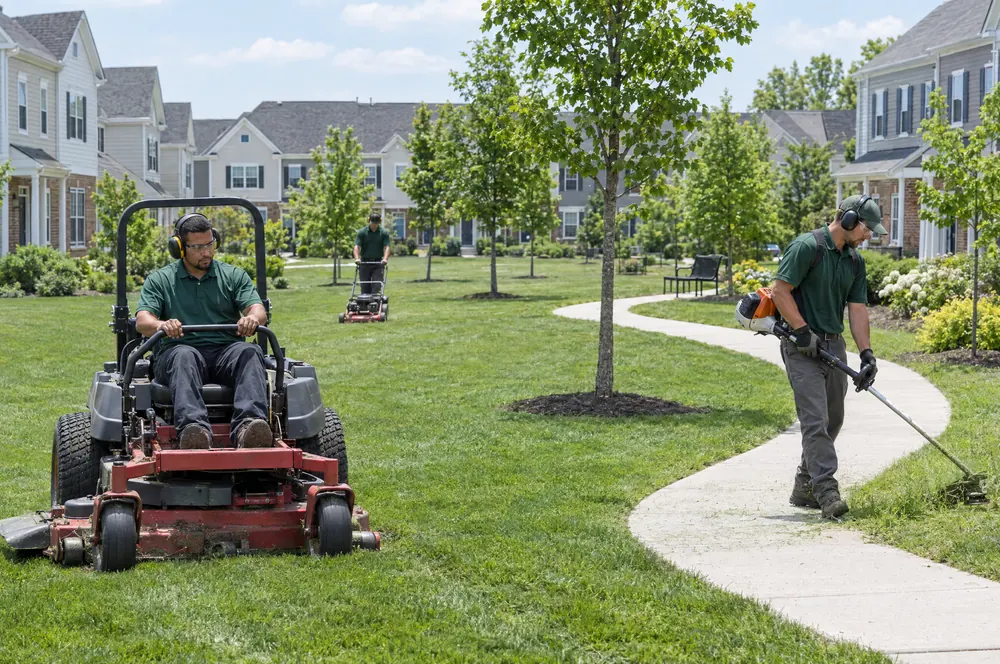
 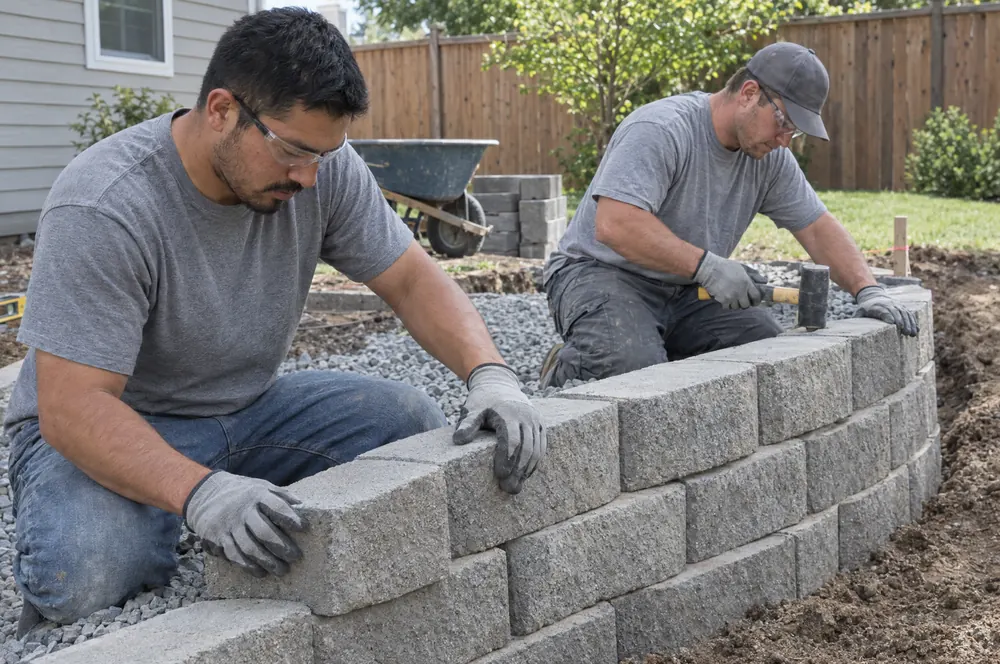 Installation and hardscapeDesign-build, patios, segmental walls, grading, drainage and irrigation installs.
 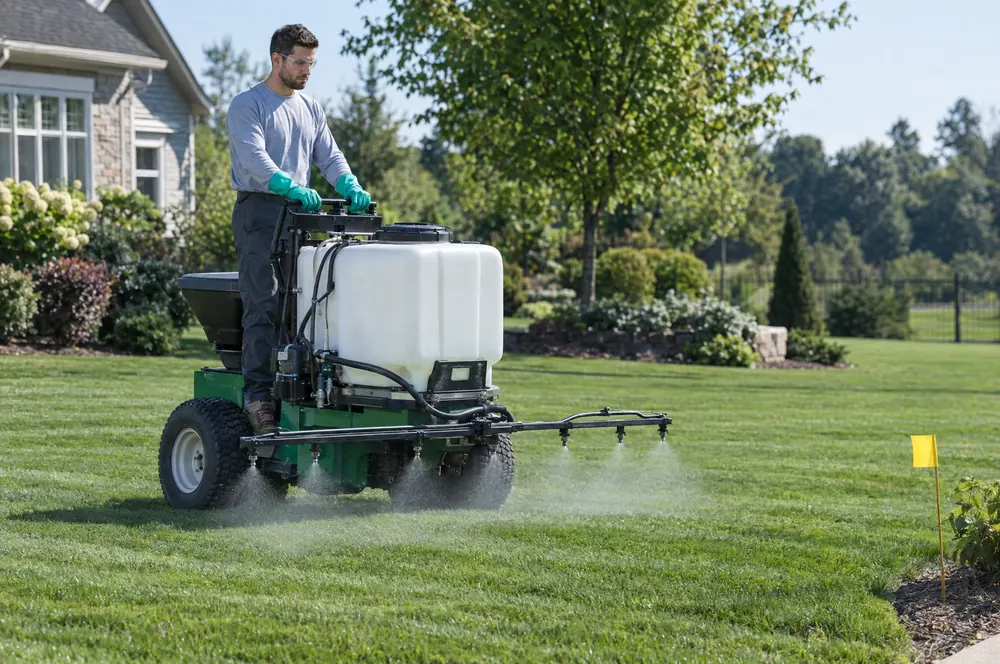 Lawn and turf treatmentFertilizer rounds, weed control, grub control and the licensed applicators who run the sprayers.
 The coverage a landscaping company actually needs
Your insurance needs change the day you hire a helper, buy a skid steer, sign an HOA contract or add a spray rig. These are the policies we line up for landscapers, from a single truck and trailer to a multi-crew operation.
General liability
Damage and injuries your work causes to other people: a stone through a window, a gouged car door, a cut irrigation line, a client who trips over a hose. See general liability
Workers' comp
Medical bills and lost pay when a crew member gets hurt on the job, including seasonal and H-2B workers. See workers' comp
Commercial auto and trailers
Crew trucks, dump trucks and the trailers behind them, plus workers who drive their own pickups to a property. See commercial auto
Equipment and tools
Zero-turns, stand-ons, skid steers, aerators and enclosed trailers, at the shop, on the road or at a property. See equipment coverage
Pesticide and herbicide application
Drift onto a neighbor's beds, turf burn and exposure claims, which a basic policy may exclude. See chemical application coverage
Umbrella
A second layer of liability that sits over your GL, auto and employer's liability for contracts with big limit requirements. Umbrella for landscapers
License and permit bonds
Some states and cities want a surety bond on file before you can hold a landscape license or pull a right-of-way permit. Landscape license bonds
Performance and maintenance bonds
Surety for public and commercial install contracts, including the plant warranty period after the job. See performance bonds
Business owner's policy
Liability plus your shop, yard, stored stone and mulch, and lost income after a fire, packaged for smaller companies. See the BOP
Professional liability
For design-build plans, grading and drainage advice and irrigation design that a liability policy isn't built to cover. See professional liability
Cyber liability
Routing apps, autopay card data and payment-diversion scams that hit the office, not the crew. Cyber for landscapers
Unsure where to start?
Describe your services on the quote form. An agent will sort out which policies your licenses, client contracts and crew size really require. Start a quote
Why landscapers choose us
We know the work
Weekly maintenance, a spring install rush, fertilizer rounds and fall cleanups each carry a different risk. We describe your operation in terms an underwriter understands, so it lands in the right class and with a carrier that wants it.
Independent means options
No single insurer signs our paychecks. Your mowing, install and treatment mix goes to the insurers that like that mix, including markets open to licensed chemical applicators, and you see the options next to each other.
Built for growth
Gaps usually open up during a growth spurt. A property manager raises the required limits, a parks department bid calls for a bond, or a new hire shifts your comp class. Talk to us before the contract arrives, and those changes are routine.
Two decades, 28 licenses, nothing hidden
The Allen Thomas Group opened as an independent agency in 2003. It is licensed to sell insurance in 28 states, and each state page on this site shows the license number for that state so you can look it up.
What landscaping insurance covers
Landscaping business insurance is a set of policies, not one product. Together they pay for the claims that tend to follow green-industry work. Most of those claims fall into a few buckets.
Damage to a client's property or someone else's
Mowers and line trimmers throw debris. A pebble cracks a sliding door, a stick dents a parked car, an edger scrapes fresh siding. Install crews dig into a buried sprinkler main or a low-voltage lighting run. General liability is the policy built for this kind of third-party damage, and it usually responds to injuries too, like a resident who trips over a hose you left across a walkway.
Problems that show up after the job
A segmental wall can lean a season later. A regrade can send water toward a neighbor's foundation. The completed operations part of a liability policy is meant for damage that appears after you've packed up, though it typically won't pay to rebuild your own work.
Injuries to your own crew
Blade cuts, back strains from moving stone, heat illness in July and falls from a truck bed are the everyday injuries in this trade. Workers' comp pays medical bills and part of lost wages, and most states require it once you have employees.
Trucks, trailers and the equipment on them
A personal auto policy usually won't cover a truck used mainly for business. Commercial auto covers the truck, and its liability usually extends to the trailer you're towing, though some policies need each owned trailer listed. The mowers and skid steer inside the trailer need their own equipment coverage, because auto policies generally don't cover the contents.
Chemical work
Fertilizer, pre-emergent and weed control bring a different kind of claim: drift onto a neighbor's roses, a lawn burned by a misapplication, a family worried about exposure. Many liability policies limit pollution claims. Whether that reaches your spraying depends on the carrier and the policy wording.
Why we ask about fertilizer, weed and pest work up front
Our quote form asks whether you apply pesticides, herbicides or other treatments, and roughly what share of your work it is. That isn't busywork. Chemical application is one of the biggest factors in which carriers will quote a landscaping company and how they write the policy.
Some carriers add specific coverage for applicators; others limit it or decline accounts where treatment is a large part of the business. Knowing your mix early lets us go straight to the markets that fit instead of collecting declines. Most states also require a commercial applicator license to apply pesticides for hire, and many tie the business license to proof of liability insurance. Indiana, for example, asks for at least $300,000, and New York asks for $1 million per occurrence. Our pesticide applicator license guide explains what to look for, and the chemical application coverage page covers the insurance side. Get a quote for your landscaping business →
How your coverage grows with your company
Insurance is easiest to fix before a contract or an audit forces it. Watch for these five turning points; each one tends to change what your policies need to do.
- The first truck and trailer. Liability, commercial auto and equipment coverage make up the starter package. Where the state licenses landscape contractors, a license bond can be a condition of the license.
- The first hire. Bringing on a helper is usually when comp becomes mandatory. The payroll and job descriptions you report get checked at the yearly premium audit, and seasonal crews make that audit trickier.
- The first HOA or property-manager contract. Expect requests to name them as additional insured and to waive subrogation, proven on a certificate. Our certificate of insurance guide decodes the language.
- The first public bid. Parks, schools and municipal grounds often ask for performance and maintenance bonds, and the limits in those contracts frequently call for an umbrella policy.
- More crews and a second yard. Extra trucks, extra payroll and another location are the point to rebuild the whole program at renewal instead of simply signing the same paperwork.
From quote form to certificate
Accurate pricing for a landscaping company needs a few minutes of talk with an agent. The process runs like this.
- Fill out the short form. Services, state, revenue, payroll, crew size, chemical work and your renewal date. Most owners finish in about a minute.
- An agent calls you. A licensed agent reads your answers and calls to fill in the details underwriters care about. You'll hear from us within one business day (requests sent on a weekend are answered the following Monday).
- Your account goes to market. We send it to the insurers that write landscaping companies in your state.
- You pick, and the paperwork follows. We compare limits, exclusions and premiums with you, put the chosen policy in force and issue the certificates your HOAs and property managers need.
Licensed for landscaping businesses in 28 states
Tap a state for its landscape, pesticide and irrigation licensing rules, the insurance those licenses can require, and the agency license number we hold there.
Licensed · Not licensed
What landscaping insurance costs
Two landscaping companies with the same headcount can see very different premiums. An underwriter looks at how payroll splits across class codes, gross receipts, which services you sell, how much spraying or heavy equipment is involved, the trucks and trailers on the road, past claims and the limits clients demand. A solo mowing route with no claims lands near the bottom of the range. A company running install crews, hardscape and turf treatment lands well above it.
Your price depends on your payroll and class codes, your revenue, the services you offer (especially chemical work), your trucks and trailers, your claims history and the limits you choose. The landscaping insurance cost guide lists published price ranges by coverage and company size, and the honest ways to bring a premium down.
The agency behind the site
Frequently asked questions
Do landscapers need liability insurance?
How much does landscaping insurance cost?
How much is $1 million in general liability for a landscaper?
Does my policy cover pesticide or herbicide damage?
Do I need workers' comp for seasonal workers?
Can an LLC get liability insurance?
Is Landscaper Insurance Group an insurance company?
Guides for landscaping business owners
Ready to see what you'd pay?
Independent agents, 12+ A-rated carriers, and a licensed agent back to you within one business day.